
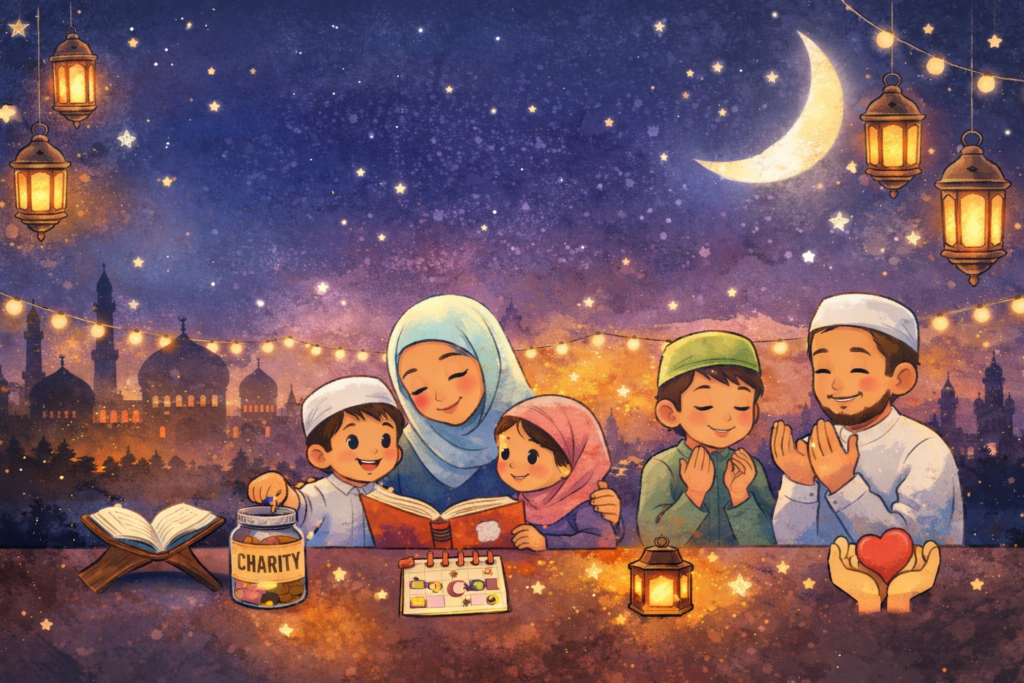
Ramadan feels magical to children.
The glowing lanterns.
The late-night prayers.
The sweet scent of iftar in the kitchen.
But here’s the deeper question for parents:
Will your child remember Ramadan as a month of restriction — or a month of meaning?
Many parenting experts agree on one thing: children do not connect to Ramadan through lectures. They connect through lived experience.
If you want your child — especially between ages 4 and 8 — to love Ramadan, not merely observe it, this simple Ramadan Parenting Framework offers five practical, faith-filled pillars to guide you.
Also read: Ramadan reading for kids: Gentle Islamic stories build faith and character
1: Shift the Focus from Food to Faith
For many young children, Ramadan can unintentionally become “the month of special food and Eid gifts.”
But Ramadan is far richer than that.
Instead of emphasising what they cannot do, gently introduce what Ramadan builds:
- Patience
- Self-control
- Gratitude
- Compassion
Rather than saying, “Don’t eat, you’re fasting,” try reframing:
“Ramadan helps our hearts grow stronger.”
This subtle shift helps children understand Ramadan emotionally — not just follow rules.
2: Teach Through Stories, Not Sermons
Children remember stories far longer than instructions.
Stories about:
- The kindness of the Prophet ﷺ
- The first revelation of the Qur’an
- Acts of generosity during Ramadan
These create emotional anchors.
Bedtime Ramadan stories are especially powerful. When faith becomes part of a child’s nightly rhythm, it slowly becomes part of their identity.
A child who connects emotionally to a story connects spiritually to the month.
Also read: This Ramadan, replace endless scrolling with online reading for your children
3: Involve, Don’t Just Instruct
Young children are not required to fast fully before puberty — but they do need participation.
Simple, healthy involvement can include:
- Trying a short “practice fast”
- Helping set the iftar table
- Decorating the home for Ramadan
- Making a Ramadan countdown calendar
- Adding coins to a charity jar
Participation builds ownership. Ownership builds love.
When a child says, “This is our Ramadan tradition,” you’ve already planted something lasting.
4: Create Positive Family Rituals
What children remember most about Ramadan is not instruction — it is atmosphere.
Think about creating:
- A nightly family dua
- A Ramadan good-deed jar
- A weekly Qur’an listening time
- A simple Ramadan bedtime routine
Rituals create emotional safety.
And emotional safety helps faith take root.
When Ramadan feels calm, warm and joyful, children associate it with belonging — not pressure.
5: Teach Gratitude and Responsibility
Ramadan offers a natural way to build empathy in children.
Simple habits matter:
- Avoid wasting food at iftar
- Appreciate water before drinking
- Share meals with neighbours
- Talk about those who have less
When children connect fasting with empathy — not just hunger — the spiritual lesson deepens.
This is how Ramadan shapes character, not merely habits.
💡 Why This Ramadan Parenting Framework Works
Children aged 4–8 learn best through:
- Experience
- Repetition
- Emotion
- Modelling
They do not need detailed theological explanations.
They need to feel:
- Included
- Calm
- Valued
- Inspired
This framework transforms Ramadan from “a set of rules” into “a set of rituals.”
From obligation into identity.
Also check out: Relevant books
🌙 The Bigger Goal: Raising Children Who Love Ramadan
If Ramadan feels stressful or overly restrictive, children may resist it later in life.
But if Ramadan feels warm — filled with stories, shared duas, gentle structure and family connection — they will carry that love into adulthood.
The goal is not perfection.
The goal is planting love. And love grows quietly — night after night, Ramadan after Ramadan.
Frequently Asked Questions
At what age should children start learning about Ramadan?
Children can begin learning about Ramadan as early as age 3 or 4 through stories, simple rituals, and positive family traditions.
Should young children fast during Ramadan?
Children are not required to fast before puberty. However, short “practice fasts” can help them feel involved.
How do you make Ramadan meaningful for kids?
Focus on storytelling, family rituals, gratitude, and participation rather than strict rules.