

What Does Islam Say About Bullying? A Guide for Muslim Children
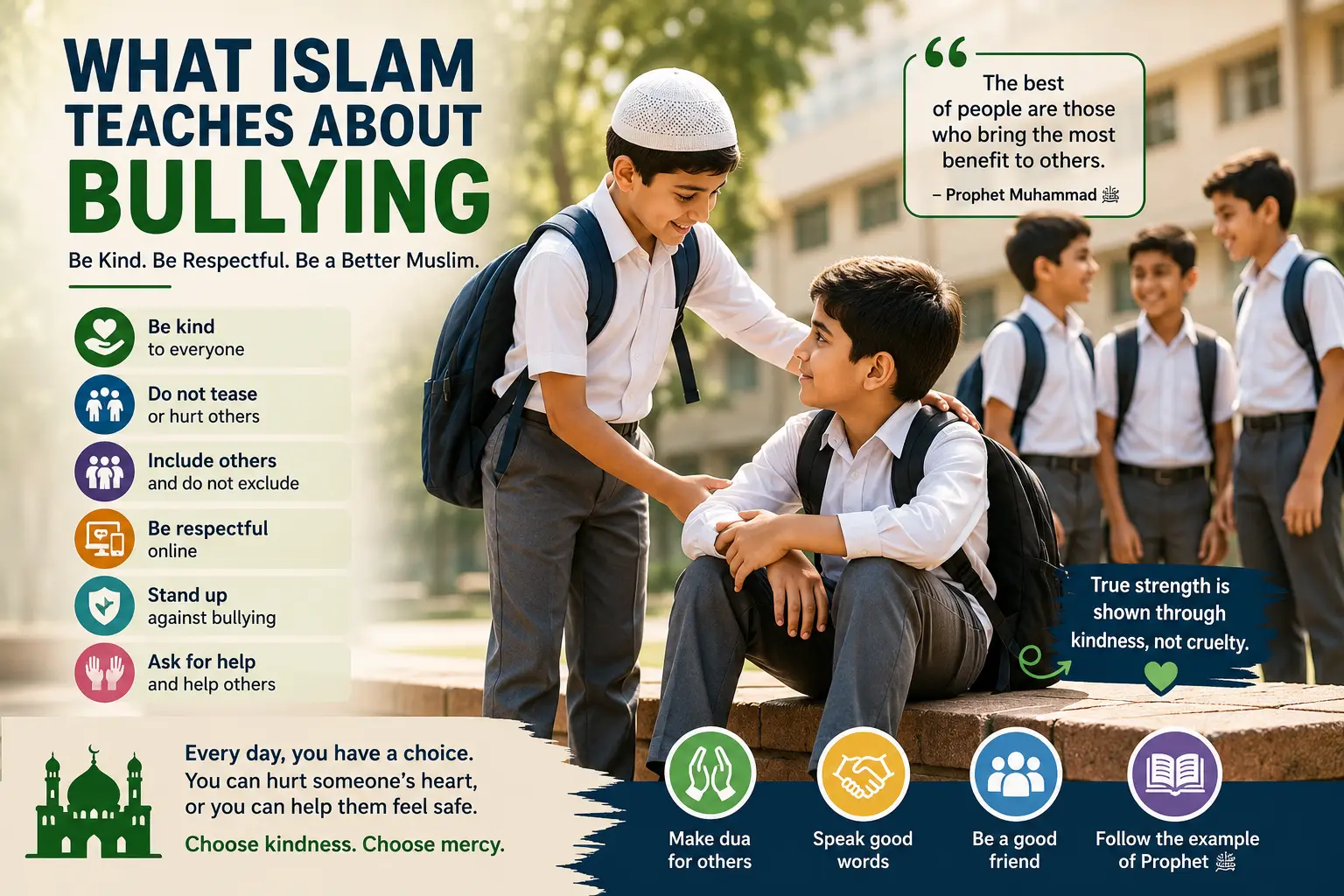
Have you ever seen someone being laughed at because of the way they look?
Perhaps a child was left out of a game because they seemed different. Maybe a classmate was teased again and again until they became quiet and sad.
These are all forms of bullying.
Bullying can happen at school, on the playground, in the neighbourhood or online. It can hurt a person’s feelings, damage their confidence and affect them for a long time.
Islam teaches Muslims to be kind, fair and respectful. A Muslim should never bully others or stay silent when someone is being harmed.
What Does Islam Say About Bullying?
Islam teaches that every person deserves dignity and respect.
Making fun of others, calling them hurtful names, spreading rumours and excluding them on purpose all go against good Islamic character. Muslims are taught to speak kindly, help those who are weak and treat others as they would like to be treated.
The Prophet Muhammad ﷺ showed mercy, patience and respect to people from every background. His example teaches us that true strength is shown through kindness, not cruelty.
Also Read Growing With Adab: A Powerful Book for Muslim Teen Identity, Faith and Family
What Is Bullying?
Bullying is more than a small disagreement between friends.
It usually means hurting, frightening or embarrassing someone repeatedly and on purpose. It may happen face to face or online.
Bullying can include:
- Calling someone hurtful names
- Making fun of their appearance, clothes, accent or family
- Spreading rumours
- Leaving someone out on purpose
- Threatening, pushing or hitting others
- Sending cruel messages online
- Posting unkind comments
- Sharing embarrassing pictures or videos without permission
A person may say, “It was only a joke.” But a joke is not harmless if it makes someone feel afraid, ashamed or unwanted.
The Prophet Muhammad ﷺ Taught Kindness
The Prophet Muhammad ﷺ was known for his kindness and mercy.
He treated children and adults with respect. He cared for the poor, helped those in need and never judged people by their appearance or wealth.
Muslim children should follow his example by speaking gently, including others and standing up for what is right.
Kindness is not a small thing. A smile, a kind word or an invitation to join a game can change someone’s whole day.
Check out: Relevant books
Teasing Can Cause Real Hurt
Children sometimes tease one another without thinking about the effect of their words.
A nickname may sound funny to one person but feel painful to another. Words can remain in someone’s heart long after they have been spoken.
Before saying something, ask yourself:
- Would I like someone to say this to me?
- Will these words make someone feel happy or hurt?
- Would Allah (SWT) be pleased with what I am about to say?
Kind words build trust and friendship. Hurtful words can break them.
Do Not Leave Others Out
Bullying is not always loud or easy to notice.
Sometimes it happens quietly.
Imagine that everyone in class is invited to play except one child. Imagine a student eating alone every day while others refuse to sit with them.
Leaving someone out on purpose can be deeply painful.
When you see someone standing alone, smile, say hello or invite them to join you. You may think it is a small action, but it can help that person feel seen and accepted.
Also Read: The Path of the Caliphs – True Islamic Stories for Children (Ages 5–12)
What Is Cyberbullying?
Cyberbullying is bullying that happens through phones, tablets, computers, games or social media.
It can include:
- Sending rude or threatening messages
- Posting insulting comments
- Making fun of someone in a group chat
- Spreading rumours online
- Sharing private or embarrassing content
- Removing someone from an online group to upset them
Always remember: you may not see the other person’s face, but your words can still hurt them.
Before posting or sharing anything, ask:
- Is it true?
- Is it kind?
- Is it necessary?
If the answer is no, do not post it.
What Should You Do If You Are Being Bullied?
If someone is bullying you, remember that it is not your fault.
You should:
- Stay as calm as you can
- Move away if it is safe to do so
- Do not bully the person back
- Tell a parent, teacher or another trusted adult
- Save messages, screenshots or other evidence of online bullying
- Block and report the person online
- Ask Allah (SWT) for strength and protection
Do not keep bullying a secret because you feel embarrassed. Asking for help is a sign of wisdom, not weakness.
If you ever feel unsafe, tell an adult immediately.
Also Read How Muslim Students Can Balance Schoolwork, Salah and Playtime
What Should You Do If You See Bullying?
A person who watches bullying and says nothing may allow it to continue.
You can help, but you should act safely.
You may:
- Stand beside the person being bullied
- Invite them to leave the situation with you
- Tell the bully to stop in a calm voice
- Refuse to laugh or join in
- Report the bullying to a teacher or trusted adult
- Include the person in your group later
Do not place yourself in danger. Getting help from an adult is often the safest and most useful action.
Sometimes one kind friend is enough to help someone feel less alone.
Choose Friends Who Encourage Kindness
Friends can influence the way we speak and behave.
Good friends do not laugh when others are being teased. They do not pressure you to be unkind. They remind you to do what is right.
Choose friends who speak politely, respect others and encourage good behaviour.
A good friend helps you become a better person and a better Muslim.
What If You Have Bullied Someone?
It takes courage to admit that you have hurt another person.
If you have bullied someone:
- Stop the behaviour
- Apologise sincerely
- Do not make excuses
- Ask how you can put things right
- Remove any harmful posts or messages
- Speak to a trusted adult if you need help changing your behaviour
- Ask Allah (SWT) for forgiveness and try not to repeat the mistake
A true apology is followed by better behaviour.
Also Read: Introducing Faith with Kindness: Know Your Prophets for Young Readers
Be Someone Others Feel Safe Around
Think about how people feel when they are with you.
Do your classmates feel respected?
Do younger children feel safe around you?
Do people know that you will not laugh when they are hurt?
These are signs of good character.
Being strong does not mean making others afraid. Being popular does not mean making fun of people. True strength is shown by protecting others, controlling anger and choosing kindness.
Remember
A successful Muslim is not only someone who prays and learns. A successful Muslim also treats people with fairness, mercy and respect.
Every day, you have a choice.
You can hurt someone’s heart, or you can help them feel safe.
Choose kindness.
Choose mercy.
Choose the example of the Prophet Muhammad ﷺ.
May Allah help us speak gently, stand against bullying and protect every child from harm. Ameen.
Frequently Asked Questions
Is teasing always bullying?
Not every joke is bullying. But teasing becomes harmful when it is repeated, cruel or meant to embarrass someone. If the other person is upset, the teasing should stop.
What should a Muslim child do about cyberbullying?
Do not reply with cruel messages. Save the evidence, block and report the account, and tell a parent, teacher or trusted adult.
Is leaving someone out a form of bullying?
Yes, it can be. Repeatedly excluding someone on purpose to make them feel unwanted is a form of social bullying.
Should children tell an adult about bullying?
Yes. Telling a trusted adult can help stop the bullying and keep everyone safe. It is not tattling when someone is being harmed.