
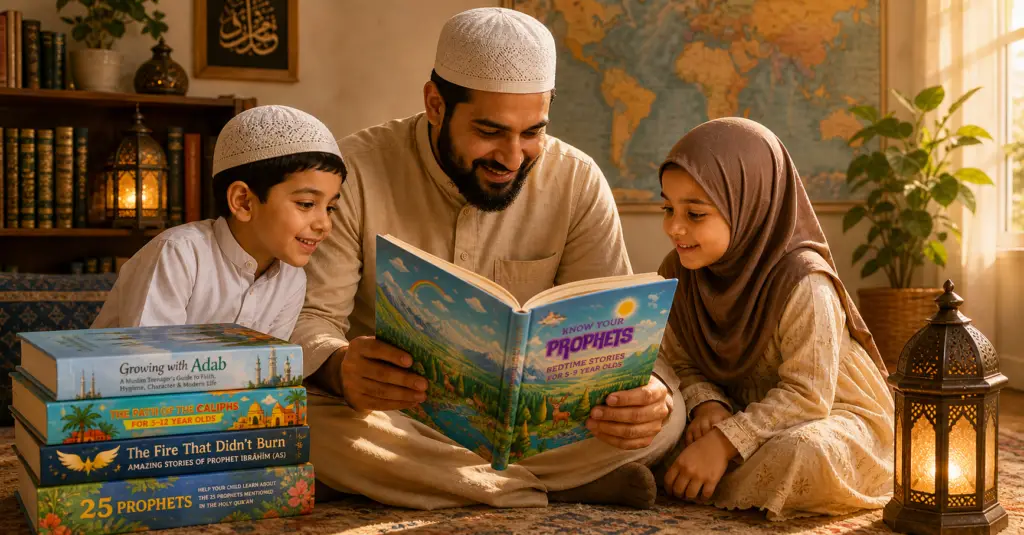
There is a moment many Muslim parents recognise.
A child comes home excited about ancient Egypt, Greek myths, Vikings, or superheroes with rich backstories. They can explain fictional worlds in detail — but know little about the stories of the Prophets (peace be upon them).
A quiet question follows:
When should I start teaching my child Islamic history?
Not just bedtime tales, but real connection, identity and understanding.
The answer is simple — and more urgent than most think.
The Best Age? Earlier Than You Think
Children are built for stories.
Before they grasp theology, they grasp courage.
Before fiqh, they understand kindness.
Before civilisation, they recognise heroes.
That is why Islamic history should not wait until the teenage years. It should begin early — gently and naturally.
Even a four-year-old can understand:
- a kind Prophet
- a brave companion
- a truthful merchant
- someone who trusted Allah in hardship
At this stage, the aim is not facts or dates.
It is to plant love.
Children remember feelings long before they remember details.
Also Read: The Path of the Caliphs – True Islamic Stories for Children (Ages 5–12)
Why Waiting Too Long Can Backfire
Many parents delay, thinking children are too young.
Meanwhile, the child absorbs:
- Disney characters
- anime plots
- Marvel timelines
- internet influencers
But barely knows:
- who Salahuddin was
- why Makkah matters
- how young companions shaped history
- what Muslims contributed to the world
By the time parents try to teach Islam “seriously” at 15, identity is often shaped elsewhere.
Children do not just need information.
They need role models.
Islamic history provides them.
Islamic History Is Not Just Dates and Dynasties
A common mistake is to teach history like a textbook:
dates, wars, lists.
Children disengage at once.
In truth, Islamic history is full of human stories:
- a boy defending the Prophet ﷺ
- a girl carrying food in secret
- a companion overcoming fear
- scholars travelling months for one hadith
- Muslims building hospitals and libraries
These stories feel alive — and children respond to what feels alive.
Check out: Relevant books
Different Ages Need Different Approaches
Ages 3–6: Build Love and Wonder
Keep it simple:
- short stories
- clear emotions
- expressive tone
- no harsh detail
Focus on:
- Prophets
- simple companion stories
- kindness, honesty, patience
Children at this age need warmth, not complexity.
Ages 7–10: Build Identity
Now curiosity grows:
“Why did this happen?”
“What made them special?”
Introduce:
- seerah in more depth
- young Sahabah
- Islamic achievements
- scholars and explorers
Make it interactive:
- maps and timelines
- story cards
- family discussions
- audio stories
At this stage, admiration begins to form.
Ages 11–15: Build Understanding
Teenagers need honesty, not slogans.
They should see:
- success and failure
- leadership and weakness
- sacrifice and decline
Encourage:
- open questions
- honest discussion
- links to the modern world
Teens respect what is real.
Also Read: Introducing Faith with Kindness: Know Your Prophets for Young Readers
The Biggest Mistake: Turning History into a Lecture
Children do not connect through lectures.
They connect through experience.
They may forget explanations — but remember:
- your tone
- family story nights
- shared discussions
- stories of young companions like them
Teaching works best when it feels alive.
How to Make Islamic History Engaging
1. Tell Stories Properly
Avoid textbook language.
Instead of stating facts, build scenes and emotion.
Stories that feel real are remembered.
2. Focus on Young Heroes
Children relate to people their age.
Tell them about:
- Ali (may Allah be pleased with him) showing courage
- Usama ibn Zayd leading young
- Ibn Abbas learning eagerly
This builds relevance.
3. Use Modern Formats
Meet children where they are:
- animated videos
- audiobooks
- podcasts
- illustrated books
- quizzes and family sessions
Engagement matters.
4. Connect Past to Present
Ask:
- What would you do?
- Why were they brave?
- What can we learn today?
This turns stories into guidance.
Questions Parents Often Ask
What if my child gets bored?
Change the method, not the subject.
Should I teach difficult history?
Yes — but gradually and with care.
What if I do not know enough myself?
Learn together. Children value effort more than perfection.
Islamic History Is Really About Identity
At its heart, Islamic history answers:
- Who am I?
- Where do I belong?
- What do Muslims stand for?
- What kind of person should I become?
If children grow up only with the world’s stories, they absorb the world’s values.
If they grow up with the stories of the Prophets, companions and scholars, they gain something deeper:
- belonging
- dignity
- purpose
Islam becomes not just rules — but a living legacy.
And in today’s world, that connection is not optional.
It is essential.