

10 Small Acts of Adab That Make a Big Difference at School
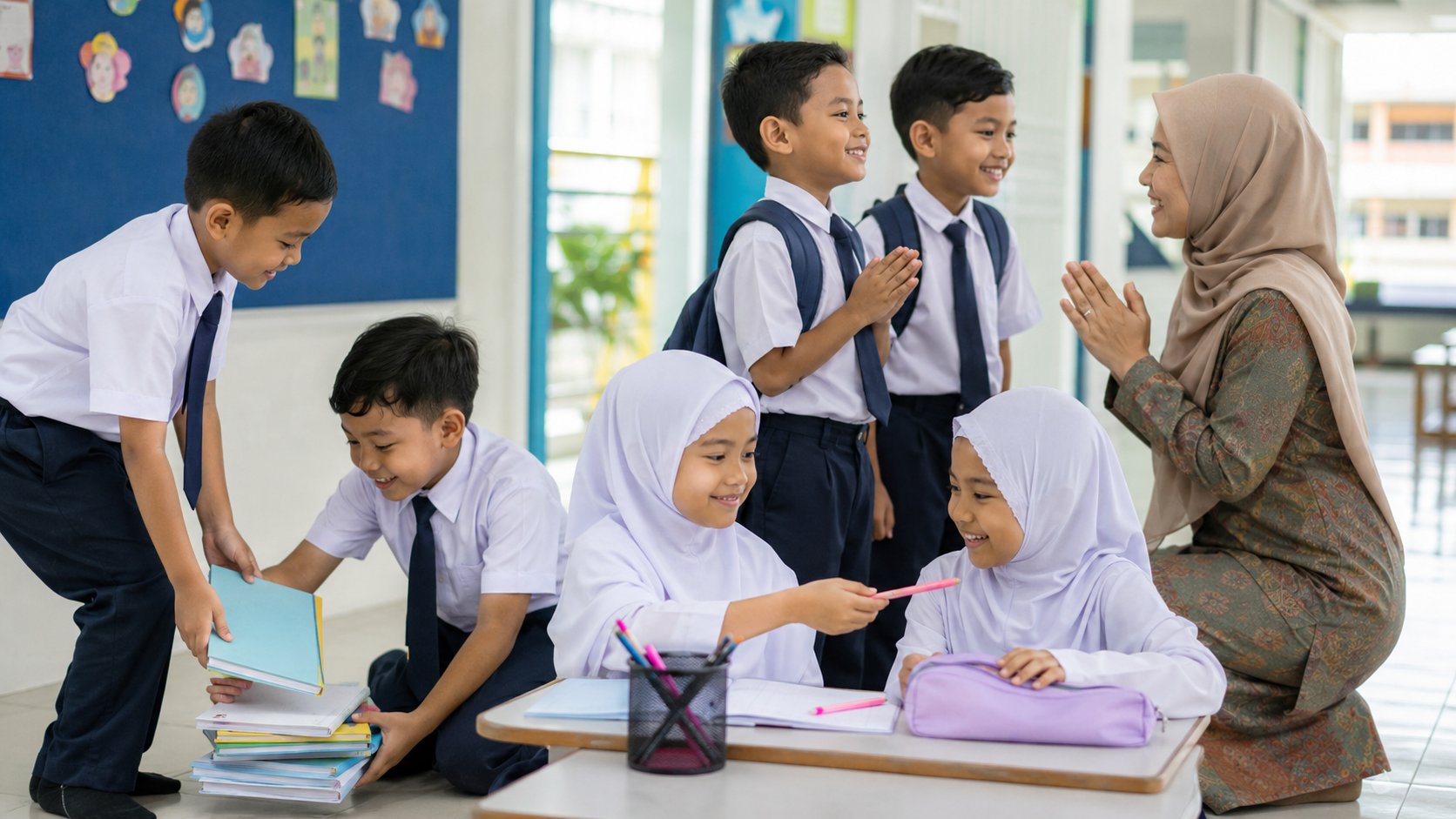
You are walking into class when you notice a pencil case lying on the floor.
You could ignore it.
You could kick it aside.
Or you could pick it up and place it on the teacher’s desk.
It takes only a few seconds. Nobody may even notice what you did.
But that small action says something about you.
It shows care.
It shows responsibility.
And most importantly, it shows adab.
Adab is not only about saying the right words or behaving well when adults are watching. It is the way we carry ourselves every day -- with classmates, teachers, school staff, friends, and even people we do not know very well.
At school, some of the most powerful acts of adab are also the smallest.
Also Read Introducing Faith with Kindness: Know Your Prophets for Young Readers
What’s Really Happening
School can feel busy.
There are classes to attend, homework to finish, friends to keep up with, games to play, group chats to check, and sometimes stressful tests to prepare for.
In the middle of all that, it is easy to think that good character is something “extra.”
But it is not.
The way you speak to someone who annoys you matters.
The way you behave when the teacher leaves the room matters.
The way you treat the quiet student in your class matters.
The way you react when someone makes a mistake matters.
These everyday moments are where character is built.
You do not need to do something huge to become a person of good adab. Small actions, repeated often, can slowly shape who you become.
The Islamic Perspective
Islam gives great importance to good character.
The Prophet Muhammad ﷺ said:
“The best among you are those who have the best
character.”
(Sahih al-Bukhari and Sahih Muslim)
That means your manners are not separate from your faith.
Being respectful, honest, helpful, patient, and kind can all become acts of worship when they are done sincerely for Allah (SWT).
Allah (SWT) also tells us:
“Speak kindly to people.”
(The Holy Qur’an 2:83)
Notice how simple that sounds.
You do not need to be the most popular student.
You do not need to give long speeches.
Sometimes, one kind sentence can change someone’s whole day.
Also Read The Path of the Caliphs – True Islamic Stories for Children (Ages 5–12)
10 Small Acts of Adab You Can Practise at School
- 1.
Greet people properly.
Say Assalamu alaikum to Muslim friends, teachers, and staff when appropriate. A sincere greeting creates warmth and reminds us that others deserve peace and respect. - 2.
Listen when someone is speaking.
Try not to interrupt your teacher or classmate. Listening properly tells the other person, “What you are saying matters.” - 3.
Keep your voice under control.
Being excited is normal, but shouting across classrooms, corridors, or buses can disturb others. Good adab includes knowing when to lower your voice. - 4.
Return things you borrow.
A pen, ruler, notebook, book, charger, or sports item may seem small, but returning it on time shows honesty and trustworthiness. - 5.
Clean up after yourself.
Do not leave wrappers under your desk or expect someone else to clean your mess. Throw rubbish where it belongs and leave shared spaces tidy. - 6.
Include someone who is being left out.
If you notice someone sitting alone at lunch or standing awkwardly during a group activity, invite them in. A simple “You can join us” can mean more than you realise. - 7.
Say “thank you” to school staff.
Teachers are not the only people who help you. Cleaners, drivers, security staff, office workers, canteen staff, and helpers also deserve respect. - 8.
Do not laugh at someone’s mistake.
Someone may give the wrong answer, drop their books, mispronounce a word, or lose a game. You would not want everyone laughing if it happened to you. - 9.
Be honest even when nobody is watching.
Do not copy homework, cheat in a test, or take credit for someone else’s work. Real character appears when you could get away with something -- but choose what is right. - 10.
Make small things easier for others.
Hold a door. Pick up something someone dropped. Move your bag so another person can sit down. Share class notes with someone who was absent. Small kindnesses create a better school environment for everyone.
Also Read Growing With Adab: A Powerful Book for Muslim Teen Identity, Faith and Family
Questions You Might Be Too Shy to Ask
What if people think I am trying too hard to be “good”?
You do not need to perform good manners for attention.
Keep your intention simple.
You are trying to become a better person for the sake of Allah (SWT).
People may notice. They may not.
Either way, the action still matters.
What if my classmates are rude to me? Do I still have to be nice?
Good adab does not mean allowing people to treat you badly.
You can be firm without being cruel.
You can say, “Please don’t speak to me like that,” or ask a trusted teacher or adult for help.
Islam teaches dignity as well as kindness.
Does adab really matter if it is only something small?
Yes.
A smile is small.
A kind word is small.
Moving something harmful out of someone’s way is small.
But the Prophet ﷺ taught us not to look down on good deeds.
Small good actions can carry great value with Allah (SWT).
Also check out: Relevant books
A Thought to Take With You
Imagine if every student in your school decided to practise just one extra act of adab every day.
One person stops mocking others.
Another begins thanking the cleaner.
Someone invites the new student to sit with them.
Another returns what they borrowed without being reminded.
The school might look exactly the same from the outside.
But inside, it would feel completely different.
That is the power of adab.
You do not always need a big moment to make a big difference.
Sometimes, it begins with something as small as picking up a pencil case from the floor -- and choosing to care.