

Does Your Child Know the Prophet ﷺ — or Only Know Facts About Him?
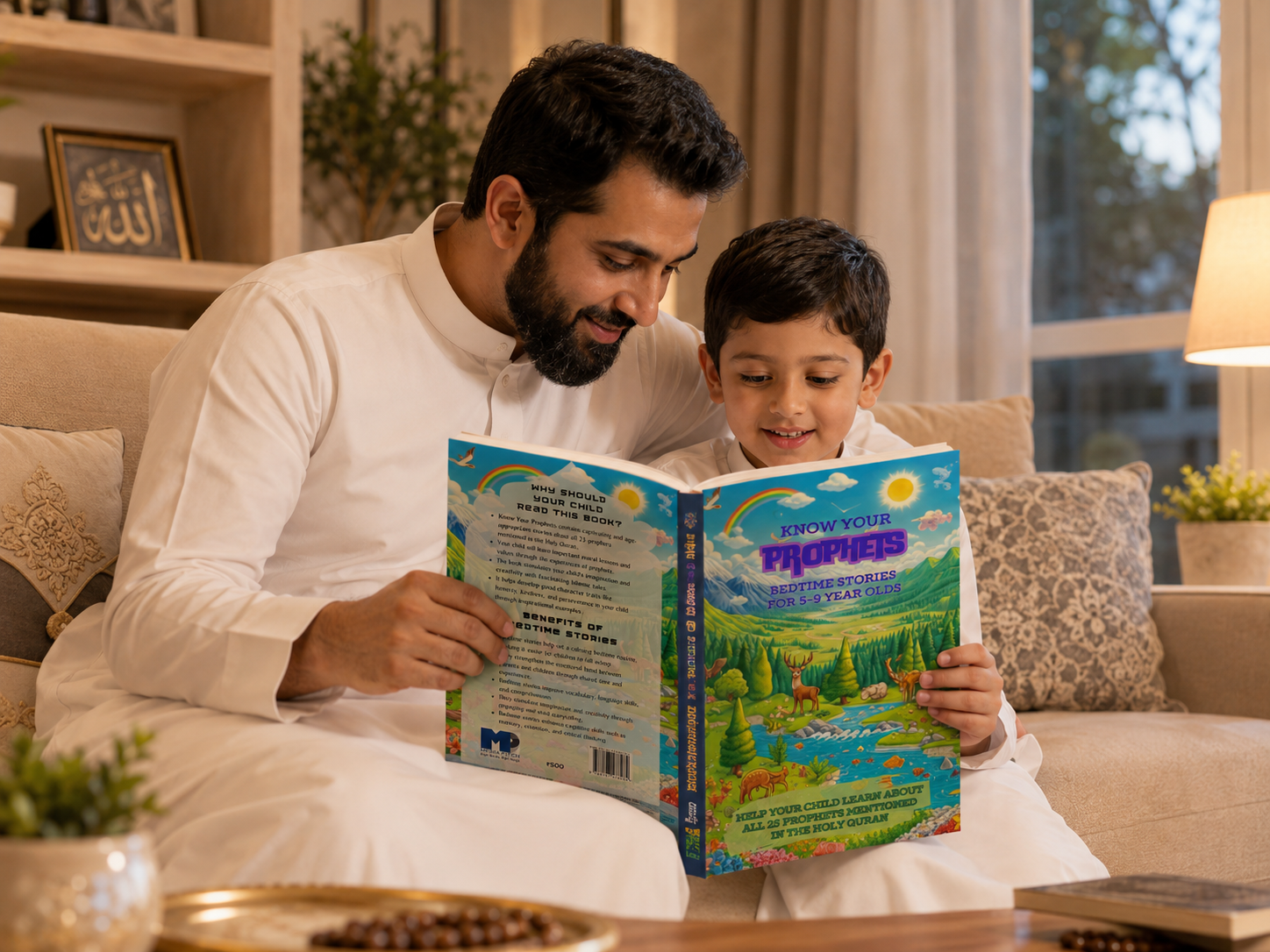
“Who was the last Prophet?”
“Muhammad ﷺ!”
“Where was he born?”
“Makkah!”
“What was his father’s name?”
“Abdullah!”
Your child gets every answer right.
You smile. Alhamdulillah. They know their Islamic studies.
But then comes a different kind of question.
What was the Prophet Muhammad ﷺ like when someone upset him?
A pause.
How did he treat children?
Another pause.
Why do you love him?
Silence.
That silence does not necessarily mean our children are not learning enough about the Prophet ﷺ.
It may mean they are learning plenty of facts about him — but have not yet had the chance to truly meet him through his story.
And there is an important difference.
Knowing About the Prophet ﷺ Is Not the Same as Knowing Him
Most Muslim children learn some important facts about the life of Prophet Muhammad ﷺ.
They may know that he was born in Makkah.
They may know about the cave of Hira.
They may know about the Hijrah to Madinah.
They may know the names of battles, companions and important events.
All of this knowledge matters.
But the Seerah was never meant to become a collection of dates and answers for an Islamic studies test.
Our children also need to discover the person behind those events.
They need to know the Prophet ﷺ who smiled.
The Prophet ﷺ who showed affection to children.
The Prophet ﷺ who forgave when revenge would have been easy.
The Prophet ﷺ who remained patient when people mocked him.
The Prophet ﷺ who cared about the weak.
The Prophet ﷺ who listened.
The Prophet ﷺ who was brave without being cruel, strong without being arrogant, and gentle without being weak.
Allah (SWT) does not simply tell us that the Messenger ﷺ existed.
He tells us:
“Indeed, in the Messenger of Allah you have an excellent
example…”
(The Holy Qur’an 33:21)
And Allah (SWT) describes him as being upon outstanding
character.
(The Holy Qur’an 68:4)
That means his life is not simply history for our children to remember.
It is an example for them to follow.
A Child Can Memorise a Biography Without Building a Relationship
Think about the people your child admires.
A footballer.
A cricketer.
A YouTuber.
A fictional superhero.
A popular personality.
Children rarely admire these people because they have memorised their date of birth.
They admire them because they know their stories.
They have seen what they do.
They know how they respond under pressure.
They talk about their victories, struggles, personalities and memorable moments.
In other words, there is an emotional connection.
That gives Muslim parents something important to think about.
If we want the Prophet Muhammad ﷺ to become a true role model for our children, we cannot introduce him only through information.
We have to introduce him through moments that make his character real.
“What Would the Prophet ﷺ Do?” Begins With Knowing What He Was Like
Imagine your child has been insulted at school.
They are angry.
You could simply say:
“Don’t be rude back. Muslims should have good manners.”
There is nothing wrong with that advice.
But now imagine your child has grown up hearing stories about how the Prophet ﷺ responded to insults, rejection and difficult people.
Suddenly patience is no longer an abstract rule.
They have an example.
Or perhaps your child sees someone being left out.
You tell them to be kind.
Also Read Introducing Faith with Kindness: Know Your Prophets for Young Readers
Again, good advice.
But if they have learned how the Messenger ﷺ noticed people whom society ignored, kindness begins to have a face and a story.
This is one reason stories are so powerful.
They help children move from:
“Islam says I should do this”
to:
“I understand what this looks like.”
Let Your Child See His Gentleness
One of the most beautiful ways to help children connect with Prophet Muhammad ﷺ is to show them how he treated children.
He was not distant or cold with them.
Authentic narrations tell us that he showed children affection. When some people found this surprising, he connected that affection with mercy.
In another narration, the Prophet ﷺ even prayed while carrying his young granddaughter Umamah, putting her down when he bowed and lifting her again when he stood.
Pause for a moment and picture that.
This is not only a fact for children to memorise.
It tells them something about who he was.
Gentle.
Human.
Approachable.
Merciful.
A child who hears stories like this may begin to think:
He ﷺ cared about children.
And that realisation can make the Seerah feel very different.
Teach the “Why”, Not Only the “What”
Sometimes children learn Islamic history like this:
This happened.
Then this happened.
Then this happened.
But after sharing a story from the life of a Prophet, try asking:
Why do you think he responded that way?
Or:
What would have been easier to do?
Or:
What does this tell us about his character?
Or even:
What would you have done?
There does not always need to be a lecture afterwards.
Sometimes the best Islamic learning happens when a child is given space to think.
A ten-minute conversation may stay in their heart much longer than a page of facts.
Also Read The Path of the Caliphs – True Islamic Stories for Children (Ages 5–12)
Help Them Notice His Character in Ordinary Life
Children need to see that following the Prophet ﷺ is not limited to big religious moments.
His example matters at the breakfast table.
In the classroom.
On the football field.
In a WhatsApp group.
When a younger sibling is irritating them.
When they lose a game.
When someone embarrasses them.
When they have an opportunity to lie.
When a friend needs help.
When they are angry.
When nobody is watching.
This is where the Seerah becomes alive.
The question slowly changes from:
“What happened in the Prophet’s life?”
to:
“What can his life teach me about mine?”
That is a much deeper form of learning.
6 Simple Ways to Help Your Child Know the Prophet ﷺ Better
- Tell one story at a time. You do not need a long lesson. A short story with one meaningful takeaway is often enough.
- Ask character questions. Instead of only asking, “What happened next?”, ask, “What does this show us about the Prophet ﷺ?”
- Connect stories to your child’s world. Friendship problems, losing a competition, feeling nervous, forgiving someone and standing up for what is right can all open meaningful conversations.
- Avoid turning every story into a lecture. Sometimes simply let the story sit with them.
- Talk about his qualities often. Mention his patience, courage, honesty, humour, mercy, generosity and gentleness naturally in family conversations.
- Read together. Even older children benefit from discussing Islamic stories with a parent rather than always reading alone.
Also check out: Relevant books
You Don't Need Your Child to Know Everything
Parents sometimes feel pressure.
My child doesn't know enough Seerah.
They can't remember all the names.
They forgot that event.
Islamic knowledge is important, and learning should continue.
But our goal is not simply to raise children who can win a Prophet trivia competition.
Imagine instead a young Muslim who knows enough about Prophet Muhammad ﷺ to think of him when faced with a difficult choice.
A teenager who remembers his courage when afraid to stand for what is right.
A child who remembers his mercy before being cruel to someone weaker.
A young person who remembers his honesty when lying would be easier.
That is knowledge becoming character.
And that matters enormously.
Start With Stories That Make Them Curious
Children usually learn best when they want to know what happens next.
That is why stories of the Prophets can be such a powerful doorway into faith.
Prophet Nuh عليه السلام teaches perseverance.
Prophet Ibrahim عليه السلام opens conversations about faith, courage and questioning what everyone else accepts.
Prophet Yusuf عليه السلام teaches children about jealousy, temptation, patience and forgiveness.
Prophet Musa عليه السلام shows that courage does not mean never feeling afraid.
And the life of Prophet Muhammad ﷺ brings together extraordinary lessons in mercy, leadership, resilience, family life, friendship, worship and character.
When these stories are told as living journeys rather than lists of facts, children begin to recognise something:
The Prophets faced real tests. They made real choices. And their stories have something to say about my life too.
That is the spirit behind Know Your Prophets — helping young readers go beyond names and events to discover the people, struggles and lessons within the stories of Allah (SWT)'s Prophets.
Because knowing that a Prophet lived thousands of years ago is valuable.
But understanding why his story still matters today can change the way a child sees faith.
Also Read Growing With Adab: A Powerful Book for Muslim Teen Identity, Faith and Family
Questions Parents Often Ask
How can I teach my child about Prophet Muhammad ﷺ?
Begin with short, age-appropriate stories that reveal his character rather than trying to cover his entire biography at once. After each story, talk about one quality — such as mercy, courage, patience or honesty — and connect it with something your child experiences in everyday life.
Why is learning about Prophet Muhammad ﷺ important for children?
The Holy Qur’an presents the Messenger of Allah ﷺ as an excellent example for believers. Learning about his life helps children understand how Islamic values such as mercy, honesty, patience and courage look when lived in the real world.
How can I make Seerah interesting for children?
Use storytelling, questions and conversation instead of relying only on memorisation. Ask your child what surprised them, what choice they would have made and what they learned about the Prophet’s ﷺ character.
At what age should children start learning the Seerah?
Children can begin hearing simple stories about the Prophet ﷺ from a young age. As they grow, those same stories can be explored at a deeper level, including their emotional, moral and spiritual lessons.
Should children memorise facts about the Prophet ﷺ?
Important facts have their place. But factual knowledge should be accompanied by understanding his character, choices and teachings. The goal is not only for children to know what happened, but to recognise why his example matters in their own lives.
One Question for Tonight
Tonight, instead of asking your child:
“What do you know about Prophet Muhammad ﷺ?”
try asking:
“What is one thing about Prophet Muhammad ﷺ that makes you love or admire him?”
Don't worry if they cannot answer immediately.
That is not the end of the conversation.
It may be the beginning of a much more important one.