

How Eid Milad-un-Nabi Can Become a Week of Learning for Children
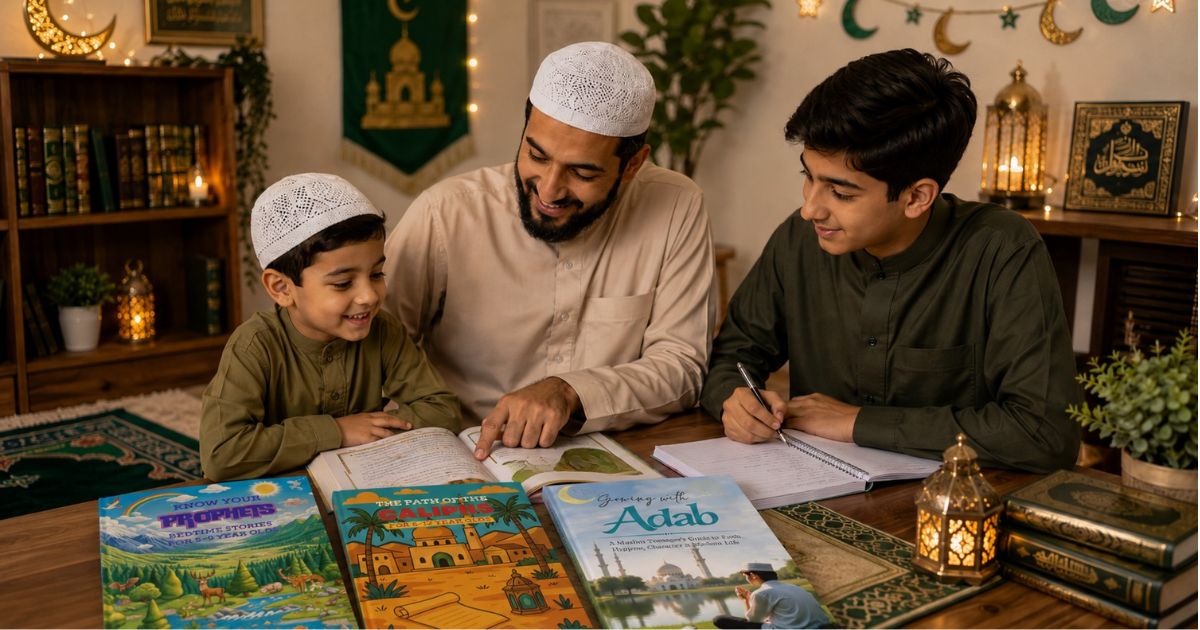
For many Muslim families, Eid Milad-un-Nabi ﷺ is a time to remember the life, character and teachings of Prophet Muhammad ﷺ.
Families and communities mark the period in different ways. Some attend gatherings, listen to talks about the Seerah, recite salawat or spend time reflecting on the Prophet’s ﷺ life. Muslims also hold different scholarly views about whether and how the occasion should be formally observed.
But there is one point on which parents can find common ground: children should know Prophet Muhammad ﷺ, understand his character and learn from the way he lived.
Rabi al-Awwal can therefore be a valuable opportunity to turn remembrance into meaningful Islamic learning that continues long after the occasion has passed.
Why is Eid Milad-un-Nabi important for children?
Eid Milad-un-Nabi can give parents an opportunity to introduce children to the life, character and teachings of Prophet Muhammad ﷺ in an age-appropriate way.
Children often begin with simple facts:
He was born in Makkah. He received revelation from Allah (SWT). He migrated to Madinah. He was the final Messenger of Allah (SWT).
These facts matter, but they are only the beginning.
Children also need to discover what kind of person the Prophet ﷺ was.
How did he respond when someone was rude to him? How did he treat children, neighbours and people in need? How did he behave as a husband, father, friend and leader? What did he do when he was hurt, opposed or victorious?
Such questions make the Seerah more than a collection of dates and events. They help children connect the Prophet’s ﷺ example with situations they face in everyday life.
Also Read Growing With Adab: A Powerful Book for Muslim Teen Identity, Faith and Family
What can children learn from Prophet Muhammad ﷺ?
The Seerah offers practical lessons for childhood and adolescence.
A child struggling with anger can learn about patience. A teenager dealing with disagreement can learn about respectful speech. Someone who feels excluded can learn about compassion. A student facing pressure can learn about perseverance and trust in Allah (SWT).
The Prophet’s ﷺ life also gives parents natural ways to discuss honesty, mercy, courage, generosity, forgiveness, humility, responsibility, respect for parents, kindness to neighbours and good manners.
Instead of simply saying, “You should behave well”, parents can ask:
“How would the Prophet ﷺ have behaved in this situation?”
That simple question turns Islamic learning from a set of instructions into a way of thinking.
Go beyond the Seerah: teach children about the Prophets
Rabi al-Awwal can also be the starting point for a wider exploration of the Prophets mentioned in the Holy Quran.
Children may recognise the names of Prophet Adam (AS), Prophet Nuh (AS), Prophet Ibrahim (AS), Prophet Musa (AS), Prophet Yusuf (AS) and Prophet Isa (AS). But knowing their stories allows children to understand the qualities for which they are remembered.
Prophet Nuh (AS) teaches perseverance. Prophet Ibrahim (AS) offers lessons in faith and obedience. The story of Prophet Yusuf (AS) explores patience, temptation, forgiveness and trust in Allah (SWT). Prophet Musa (AS) shows courage in confronting injustice.
Learning about earlier Prophets also helps children understand that Prophet Muhammad ﷺ belongs to a long line of Prophets who called people to the worship of Allah (SWT).
A child-friendly book such as Know Your Prophets can help turn this learning into a regular family habit rather than a one-day activity.
After each story, parents need ask only three questions:
- What happened?
- What quality did the Prophet show?
- How can we practise that quality ourselves?
Simple discussion often makes a story more memorable than a long lesson.
Check out: Relevant books
Introduce children to the Rightly Guided Caliphs
For many children, Islamic history seems to end with the life of Prophet Muhammad ﷺ. Yet learning what happened afterwards helps them understand how the early Muslim community developed.
Who was Abu Bakr (RA)? Why is Umar ibn al-Khattab (RA) remembered for justice? What can children learn from the generosity of Uthman ibn Affan (RA)? What qualities marked the life of Ali ibn Abi Talib (RA)?
The lives of the Khulafa-e-Rashideen, or Rightly Guided Caliphs, introduce children to leadership, justice, responsibility, courage, consultation, generosity and public service.
A book such as The Path of the Caliphs can provide a bridge between the Seerah and the wider story of Islamic civilisation.
For older children and teenagers, parents can move beyond facts and ask bigger questions: What makes a good leader? Is power more important than justice? What responsibility does a leader have towards weaker members of society?
Islamic history then becomes a conversation about character rather than simply a record of dates and battles.
Make adab part of Islamic learning
Learning Islamic history has limited value if it does not influence behaviour.
That is why adab — good Islamic manners and conduct — should be an essential part of children’s Islamic education.
Children can learn to greet others warmly, speak politely, listen without interrupting, respect parents and teachers, avoid mocking others, apologise when they are wrong, keep promises and show gratitude.
For teenagers, these lessons should also extend to digital life.
What does adab look like in a WhatsApp group? How should a Muslim respond to an insulting comment online? Is it right to forward an embarrassing photograph of a classmate? How should someone disagree with a teacher, parent or friend?
Such questions connect Islamic ethics with situations young people actually face.
Books on everyday character, including Growing With Adab, can complement stories of the Prophets by helping children turn principles into habits.
Also Read: The Path of the Caliphs – True Islamic Stories for Children (Ages 5–12)
How can parents use Eid Milad-un-Nabi for Islamic learning?
Parents do not need an elaborate programme. A simple seven-day Prophetic Learning Week can make the period meaningful.
Day 1: Introduce the life and mission of Prophet Muhammad ﷺ.
Day 2: Explore how the Prophet ﷺ treated children.
Day 3: Read the story of one Prophet from the Holy Quran.
Day 4: Introduce one of the Rightly Guided Caliphs.
Day 5: Choose one aspect of adab, such as patience or kind speech, and practise it throughout the day.
Day 6: Hold a short family quiz based on what everyone has learnt.
Day 7: Choose one Sunnah-inspired habit or act of kindness that the family will continue.
The most important word is continue.
Do not let Islamic learning end with the occasion
The greatest missed opportunity would be to make Islamic learning something children encounter only on special days.
Eid Milad-un-Nabi may provide the spark, but the habit should last throughout the year.
Create a small Islamic bookshelf. Read one story before bed. Choose one Prophet each month. Learn about a Companion or Caliph. Discuss one aspect of adab over dinner. Ask children questions instead of only lecturing them, and give them room to ask difficult questions in return.
Ten minutes of thoughtful conversation repeated throughout childhood may have more influence than an elaborate programme held once a year.
Also Read: Introducing Faith with Kindness: Know Your Prophets for Young Readers
Frequently asked questions
What is Eid Milad-un-Nabi?
Eid Milad-un-Nabi, also called Mawlid or Milad-un-Nabi, refers to the commemoration of the birth of Prophet Muhammad ﷺ during Rabi al-Awwal. Muslims differ in their scholarly views and traditions regarding its formal observance.
How can parents explain Eid Milad-un-Nabi to children?
Parents can use the period to teach children about the life and character of Prophet Muhammad ﷺ, with particular attention to his mercy, honesty, patience, courage, generosity and treatment of others.
What should Muslim children learn about Prophet Muhammad ﷺ?
Alongside the main events of the Seerah, children should learn how the Prophet ﷺ treated family members, children, neighbours, people in need, opponents and the wider community.
How can children learn Islamic history?
Begin with age-appropriate stories about the Prophets, then introduce the Seerah of Prophet Muhammad ﷺ, the Rightly Guided Caliphs, the Companions and important events in Islamic history.
Why is adab important for Muslim children?
Adab shows children how Islamic belief should shape everyday behaviour. It includes respect, honesty, kindness, patience, humility, responsibility and good speech.
What Islamic books can parents use with children?
Age-appropriate books about the Prophets, Seerah, Islamic history and manners can help. Know Your Prophets, The Path of the Caliphs and Growing With Adab can provide useful starting points, depending on a child’s age and reading ability.
Also Read How Muslim Students Can Balance Schoolwork, Salah and Playtime
From remembrance to character
The most meaningful way to teach children about Prophet Muhammad ﷺ is not simply to tell them how deeply Muslims love him. It is to help them understand why.
They should encounter his mercy in the stories they read, his patience in the situations they discuss, his honesty in the choices they make and his concern for others in the way they treat the people around them.
From there, they can discover the Prophets who came before him, the Caliphs and Companions who carried the Muslim community forward, and the adab that should shape their own lives. Whether a family formally observes Eid Milad-un-Nabi or simply uses Rabi al-Awwal for additional Seerah study, the lasting aim can be the same: to help the next generation know Islam not only as history, but as character, conduct and a way of life.