
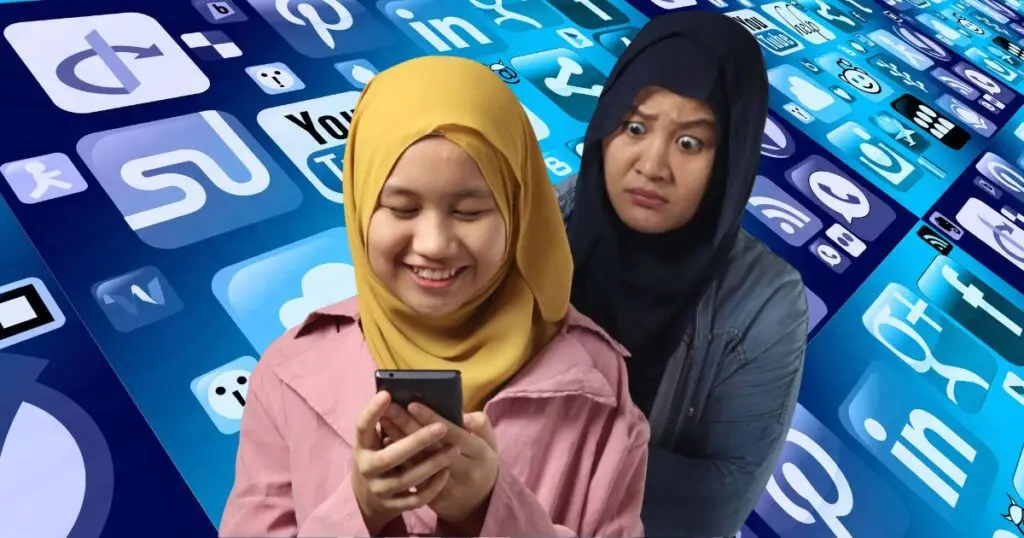
Parenting a teenager has never been simple. But now it is not just about school, friends and discipline. It is also about algorithms, identity and influence. For Muslim parents, the challenge runs deeper: how do you raise confident, practising teenagers when social media helps shape what they see, admire and believe every day?
The answer is not total control. Nor is it simply banning phones.
What works is more thoughtful than that, and often more demanding too.
Social media is both a tool and a threat
Social media is woven into teenage life. It gives young people connection, entertainment, learning and self-expression. But it also exposes them to addiction, cyberbullying, distorted standards and confusion about identity.
For Muslim teenagers, the pressure can be sharper. Social platforms can challenge religious identity, normalise values that clash with Islamic teaching, and fuel comparison, insecurity and the need for approval.
Yet social media is not only harmful. It can also help Muslim teens learn about Islam, join beneficial communities and even take part in da’wah.
So the aim should not be elimination. It should be wise navigation.
1. Build identity before you try to manage behaviour
Many parents start with screen-time rules: use your phone less, do not stay online too long, put the device away. Rules matter, but on their own they are weak.
A stronger approach is to build identity first.
When teenagers have a clear Islamic identity, healthy self-worth and a real grasp of halal and haram, they need less policing. They are better able to judge what they see for themselves.
That matters because social media does not create identity from nothing. More often, it exposes what is already fragile.
What helps is not a stream of lectures, but steady conversation. Speak casually about Islam in daily life. Tell the stories of the Prophets and the Sahaba in ways that connect with modern struggles. Let teenagers ask hard questions without fear of shame or anger. A young person who feels safe asking will be safer choosing.
Also Read Growing With Adab: A Powerful Book for Muslim Teen Identity, Faith and Family
2. Replace constant monitoring with mentorship
Of course parents should know what their children are doing online. But if your whole approach is surveillance, you may lose the relationship that makes guidance possible.
Teenagers rarely open up when they feel watched. They open up when they feel trusted.
That is why mentorship works better than interrogation. Sit with them sometimes while they scroll. Notice what they follow. Ask what they think about a trend, a video or a comment thread. Try to understand before you correct. Share your own mistakes from adolescence, including the pressures you felt, even if they came in a different form.
The goal is not to behave like a detective. It is to remain a guide.
3. Set boundaries, but make them make sense
Teenagers push back against rules that feel random. They respond better when boundaries are clear, consistent and reasonable.
That matters because Islam is not a faith of empty rules. Its commands carry wisdom. Parenting should reflect that.
So set limits, but explain them. No phones at meals protects family time. No devices an hour before sleep helps rest, mood and concentration. Limits on private scrolling reduce risk, not because teenagers are bad, but because temptation is real and judgement is still forming.
Better still, involve them in the process. Teenagers are more likely to respect rules they have helped shape.
Check out: Relevant books
4. Create balance instead of chasing total restriction
Many parents fall into one of two traps. They either give up and allow everything, or they try to ban everything. Neither works for long.
A better model is balance.
One practical way to do this is to connect online leisure to something that feeds discipline and growth: Islamic study, schoolwork, reading, exercise or family responsibilities. The point is not to turn faith into a transaction, but to teach proportion. Pleasure has a place, but it should not swallow the day.
Teenagers do not need deprivation as much as they need structure. When they learn balance at home, they are more likely to carry it into adult life.
5. Do not miss the emotional side of social media
This is where many parents misread the problem.
Teenagers are not drawn to social media only because it is entertaining. They are drawn to what it offers emotionally: attention, belonging, validation and distraction from stress.
That is why lectures about screen time often fail. If a teenager feels unseen at home, the phone becomes more than a device. It becomes refuge.
So create emotional safety first. Listen without rushing to fix everything. Do not shame them for feeling left out, anxious or curious. Avoid language that makes them hide. Guidance lands better after a young person feels heard.
If home is a place of trust, social media becomes less powerful. If home is a place of fear, social media can become the place where they go to feel known.
Also Read: The Path of the Caliphs – True Islamic Stories for Children (Ages 5–12)
6. Make social media serve deen
Parents often speak as if social media and faith sit on opposite sides. They do not have to.
Used well, social media can support deen rather than weaken it.
Follow beneficial scholars, teachers and creators together. Discuss trends through an Islamic lens. Ask what a Muslim response to a viral idea might be. Encourage teenagers to share reminders, reflections or useful content, if they are inclined to do so.
This matters because faith should not appear only in the mosque or at home. It should also be visible in the digital spaces where teenagers spend their time. If Islam feels absent online, other values will fill the gap.
7. Accept what you cannot control
This may be the hardest lesson for parents.
You can delay some forms of exposure. You can shape habits, strengthen judgement and influence the atmosphere at home. But you cannot fully control everything your teenager sees or hears.
Trying too hard often backfires. It can lead to secrecy, double lives and quiet resentment.
So shift the goal. Move from control to influence. Move from restriction alone to resilience. Move from fear of the world to preparation for it.
That does not mean being passive. It means focusing your effort where it has the best chance of lasting: in character, trust and faith.
Also Read 5 Daily Habits That Build Strong Islamic Character in Teenagers
What really works
What works is simple to say, though harder to do: strong identity, open communication and sensible boundaries.
Muslim teenagers need more than protection. They need preparation. They need parents who can explain, listen, notice and guide. They need homes where Islam is lived with confidence, not merely enforced through rules.
One day your teenager will no longer live under your roof or your timetable. At that point, they will not rely on your rules. They will rely on their values.
That is the real task of parenting in the age of social media: not to raise children who obey only when watched, but to raise young Muslims who can carry Islam into their feeds, their choices and their lives.