

Make This Islamic New Year a Fresh Start for Your Family
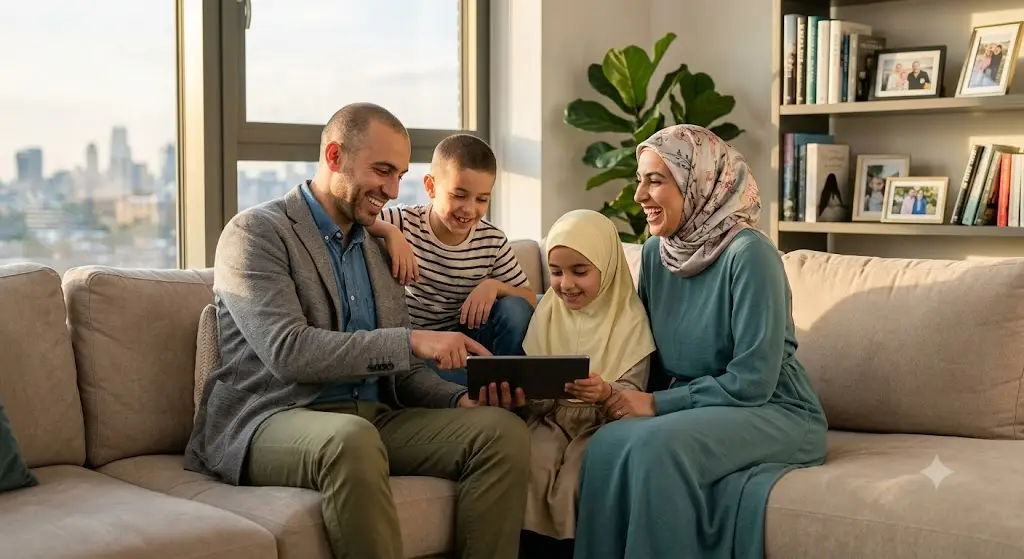

The Islamic New Year is not only a change in the Hijri calendar. For Muslim families, it can be something far more meaningful: a quiet chance to pause, reflect and begin again.
Many parents want to raise children with Islamic values, but daily life often becomes too busy. School routines, screen time, work pressure, social media, peer influence and family responsibilities can slowly push faith-building into the background. Parents may keep telling themselves, “We will start properly later.”
The Islamic New Year can be that “later”.
It does not need to begin with a big speech, a strict timetable or unrealistic resolutions. Sometimes, the best changes in a home begin with one sincere intention and a few small habits repeated with love.
Why the Islamic New Year matters for families
The beginning of a new Hijri year is a reminder that time is passing. Children are growing. Habits are forming. The atmosphere of the home is shaping their understanding of Islam.
For children, Islam is not first learned from books or lectures. It is first experienced at home. They notice how parents speak, how they react when angry, whether salah is treated seriously, whether the Holy Qur’an has a place in daily life, and whether Islamic manners are practised with warmth.
That is why the Islamic New Year can be a powerful family reset. It gives parents a natural moment to ask:
What kind of home are we building?
What values are our children absorbing?
Are we only correcting them, or are we also connecting with them?
Are we making Islam feel like pressure, or like guidance, mercy and strength?
These questions are not meant to create guilt. They are meant to create direction.
Also Read Raising Children Who Love the Prophets, Not Just Know Their Names
Start with yourself before correcting your children
One of the most powerful ways to teach Islamic values to children is to model them.
If parents want children to speak politely, they must hear polite speech at home. If parents want children to love salah, they should see salah being respected and offered on time. If parents want children to control anger, they must see adults trying to control their own anger. If parents want children to be honest, grateful and kind, these values must become visible in everyday family life.
Children may forget many instructions, but they remember the emotional tone of the home.
This Islamic New Year, instead of starting with “My child must change,” begin with a gentler question:
“What Islamic quality I can practise more sincerely as a parent?”
It may be patience. It may be softer speech. It may be praying on time. It may be spending less time on the phone. It may be apologising when you are wrong.
That one change can influence the whole home.
Choose one family habit, not ten
Many parents make the mistake of trying to change everything at once. They want children to pray more sincerely, read Holy Qur’an, reduce screen time, speak better, study harder and behave perfectly — all from tomorrow.
That usually does not work.
A better approach is to choose one family habit for the first month of the Islamic New Year.
Here are some simple ideas:
Ensure that everyone offers all Fardh salah on time.
Read one short Islamic story or Hadith before bedtime.
Say one family dua after dinner.
Spend five minutes discussing one good deed done that day.
Start a small sadaqah box at home.
Replace one daily scolding with one calm conversation.
Keep phones away at least for 20 minutes during family time.
The aim is not perfection. The aim is consistency.
When children see that Islam is lived in small, steady ways, it becomes easier for them to connect with it.
Also Read Parenting Muslim Teens in the Age of Social Media: What Really Works
Make adab a daily family goal
Adab is not only about saying the right words. It is about how a child carries themselves before Allah (SWT), with parents, siblings, teachers, friends and society.
This Islamic New Year, parents can start a simple “family adab challenge”. Each week, focus on one value.
Week 1: Speak kindly.
Week 2: Say Bismillah and Alhamdulillah with meaning.
Week 3: Help at home without being asked.
Week 4: Control anger and apologise properly.
Do not turn this into a lecture. Make it practical. Praise effort. Share examples. Tell children that adults are also trying to improve.
A home where everyone is trying to grow becomes healthier than a home where only children are constantly corrected.
Talk to children about Hijrah
The Islamic New Year is linked to the Hijrah, the migration of the Prophet Muhammad ﷺ and his companions from Makkah to Madinah. This story carries deep lessons for children: courage, sacrifice, trust in Allah (SWT), patience, planning and starting again.
Parents can explain Hijrah in simple language:
“Sometimes, for the sake of Allah (SWT), people have to leave what is familiar and move towards what is better.”
Then connect it to a child’s life.
Leaving a bad habit is a kind of personal hijrah.
Moving away from bad company is a kind of hijrah.
Giving priority to salah over laziness is a kind of hijrah.
Speaking truth instead of lying is a kind of hijrah.
Reducing harmful screen time is a kind of hijrah.
This makes the Islamic New Year meaningful, not just historical.
Check out: Relevant books
Build conversations, not fear
Many Muslim parents worry about their children’s future. They worry about faith, friends, online content, school pressure and identity. These concerns are real. But fear alone cannot raise confident Muslim children.
Children need correction, but they also need conversation.
Ask them what they find difficult. Ask what they understand about Islam. Ask what confuses them. Ask what makes it hard to pray on time. Ask what they see online. Listen before responding.
A child who feels heard is more likely to accept guidance. A child who only feels judged may begin to hide their struggles.
This Islamic New Year, make one intention: to become easier for your child to talk to.
That one change can protect them more than many lectures.
Create a family reading habit
Books can help parents teach Islamic values without making every conversation feel like correction. A good Islamic book gives children stories, examples and language to understand faith, manners and character.
Set a simple reading goal for the new Hijri year. It may be one Islamic story every night, one chapter every weekend, or one family reading session every Friday.
For younger children, choose books with clear lessons, gentle language and relatable examples. For teenagers, choose books that speak honestly about faith, identity, social media, friendships, self-respect and modern life.
The point is not only to finish books. The point is to open conversations.
Sometimes, a child may not respond to direct advice, but a story, a page or a sentence can reach their heart.
The real goal: a home that remembers Allah (SWT)
The whole exercise is not about making children perfect. It is about helping the family move one step closer to Allah (SWT).
A home does not become strong because it has no mistakes. It becomes strong when mistakes are followed by reflection, apology, dua and improvement.
Your child does not need a perfect parent. Your child needs a sincere parent. A parent who keeps trying. A parent who makes Islam visible through mercy, discipline, honesty and love.
So this Islamic New Year, let’s not only change the calendar.
Change one habit.
Soften one conversation.
Begin one family routine.
Revive one sunnah.
Open one book.
Make one dua together, daily.
Small beginnings can become lifelong memories. And sometimes, the fresh start your family needs begins with one quiet decision: this year, we will bring more faith, adab and love into our home.