
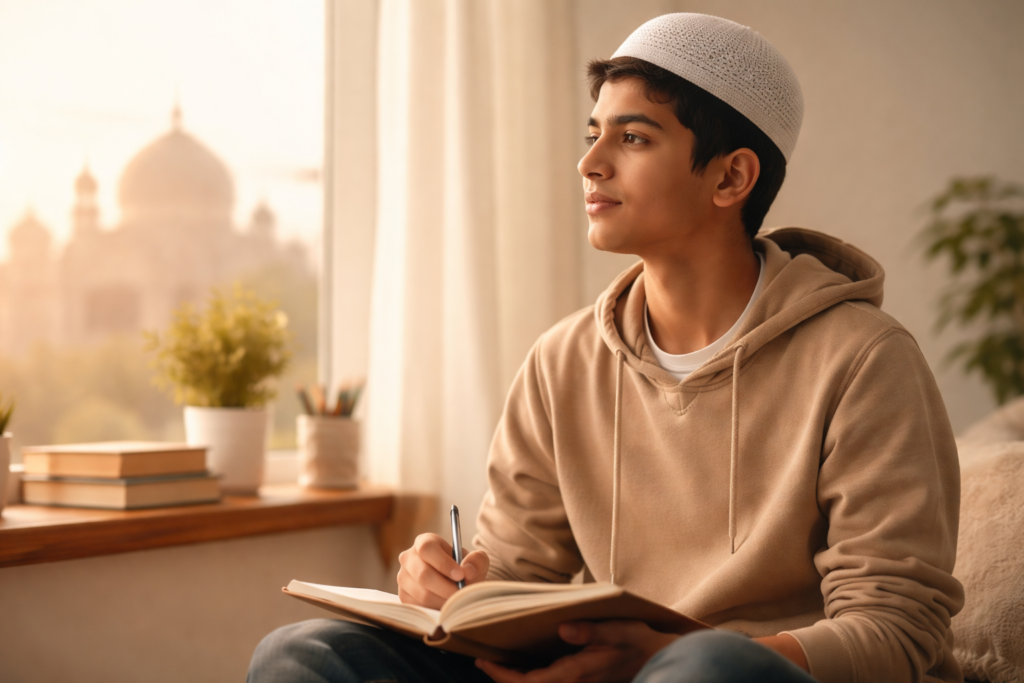
Growing up today isn’t easy — especially for Muslim teenagers trying to hold onto their identity in a world full of noise, distraction, and pressure.
Between social media, peer expectations, and constant comparison, it’s easy to lose direction. But here’s the truth:
Strong Islamic character isn’t built overnight.
It’s built through small daily habits — quiet, consistent actions that shape the heart.
Islam has always emphasized character (akhlaq) as central to faith. The Qur’an and Sunnah repeatedly highlight values like honesty, kindness, patience, and self-awareness as the foundation of a believer’s life .
Let’s explore five simple habits that can transform a teenager’s character — without overwhelming them.
1. Start the Day with Intention (Niyyah)
Before checking your phone. Before rushing into the day.
Pause.
Set an intention.
In Islam, actions are judged by intentions. Even ordinary routines — studying, helping at home, being kind — become acts of worship when done for the sake of Allah (SWT).
This habit builds clarity and purpose.
Instead of drifting through the day, teenagers begin to live intentionally.
👉 A simple practice:
“Today, I will try to please Allah (SWT) in whatever I do.”
Over time, this mindset reshapes behavior from the inside out.
Also Read Growing With Adab: A Powerful Book for Muslim Teen Identity, Faith and Family
2. Pray with Presence, Not Just Routine
Most teens are taught to pray.
But few are taught to feel the prayer.
Salah isn’t just an obligation — it’s a training system for discipline, focus, and connection. Developing focus (khushu) in prayer strengthens attention and mindfulness in daily life .
When teenagers pray with awareness — even if imperfectly — they begin to:
- Slow down
- Reflect
- Reconnect
👉 Start small:
- Focus on prayers with full attention
- Try to understand what you’re reciting
This builds a real relationship with Allah (SWT), not just a checklist habit.
3. Practice One Good Deed Daily
Character grows through action — not theory.
Islam places strong emphasis on kindness, compassion, and helping others as core moral traits .
A powerful habit:
👉 Do one intentional good deed every day
It can be simple:
- Helping a sibling
- Speaking kindly
- Sharing something
- Saying Salaam first
These small actions build:
- Empathy
- Confidence
- Self-respect
Over time, good character becomes natural, not forced.
Check out: Relevant books
4. Control Speech: Say Good or Stay Silent
In a world of constant talking, posting, and reacting, this habit is revolutionary.
The Prophet ﷺ taught:
Speak good or remain silent.
This isn’t just about avoiding bad words.
It’s about developing self-control and awareness.
Teenagers often struggle with:
- Reacting emotionally
- Gossip
- Online negativity
Practicing controlled speech builds:
- Emotional intelligence
- Respect from others
- Inner calm
👉 Try this:
Before speaking or posting, ask:
- Is it true?
- Is it kind?
- Is it necessary?
If not — pause.
5. End the Day with Self-Reflection (Muhasaba)
This is the habit most people ignore — and the one that changes everything.
In Islam, muhasaba means reflecting on your actions and holding yourself accountable .
At the end of the day, take 2 minutes:
Ask yourself:
- What did I do well today?
- Where did I go wrong?
- What can I improve tomorrow?
This builds:
- Self-awareness
- Responsibility
- Growth mindset
Instead of guilt, it creates honest progress.
Also Read: The Path of the Caliphs – True Islamic Stories for Children (Ages 5–12)
The Real Secret: Small Habits, Big Change
Here’s what most people get wrong:
They try to change everything at once.
But Islam teaches something powerful:
👉 Consistency matters more than intensity.
Even small, regular actions are beloved when done consistently .
So instead of chasing perfection:
- Start with one habit
- Keep it simple
- Stay consistent
That’s how character is built.
A Final Thought
Muslim teenagers today aren’t weak.
They’re navigating a world far more complex than ever before.
What they need isn’t pressure.
They need guidance that feels real, practical, and achievable.
Because in the end, Islamic character isn’t about being perfect.
It’s about:
- Trying
- Growing
Returning to Allah (SWT) — again and again