
For many children, summer vacation means late mornings, video games, family trips and a welcome break from homework. But for Muslim families, the long school holiday offers something even more valuable: an opportunity to strengthen faith, build good habits and deepen Islamic knowledge without the pressure of exams or school schedules.
With fewer academic commitments and more flexible routines, children suddenly gain something precious: time. The question is how that time will be used. Will it be spent entirely on entertainment, or can a portion of it be invested in knowledge, character and faith that will benefit them for years to come?
Even a few minutes a day spent reading the Holy Quran, learning duas or exploring the stories of the Prophets can create habits that last a lifetime.
Why Summer Vacation Is the Best Time for Islamic Learning
Education experts often speak about the “summer slide”, the tendency for children to forget some of what they learned during the school year when learning stops completely during long breaks. Reading skills and academic knowledge can gradually decline without regular engagement.
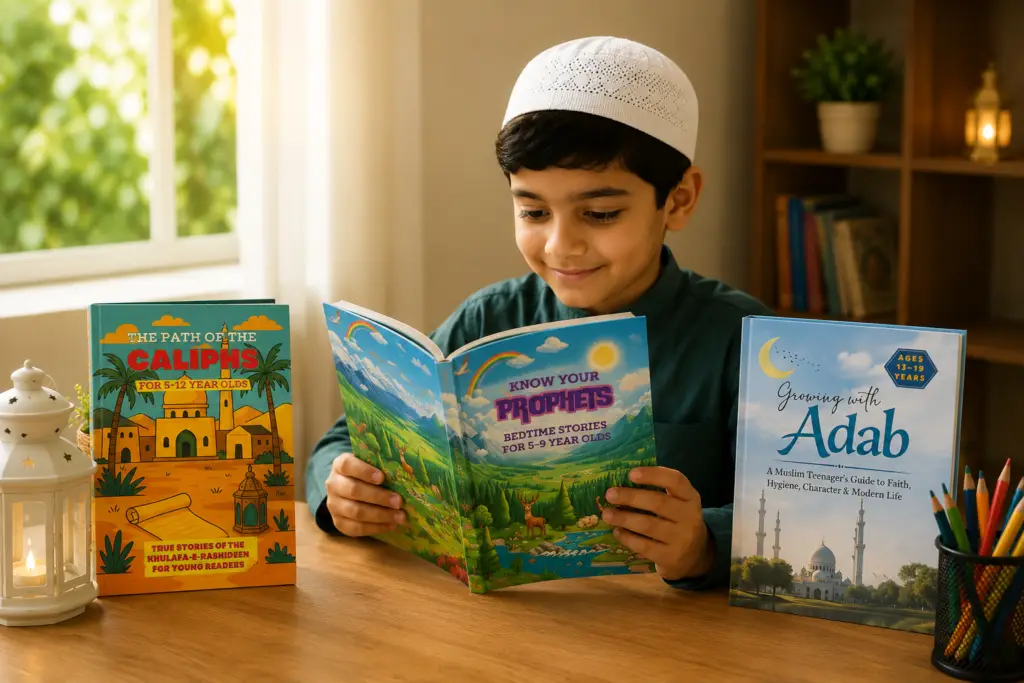
Also Read: Introducing Faith with Kindness: Know Your Prophets for Young Readers
For Muslim children, summer presents an opportunity not only to continue learning but also to strengthen their connection with Islam. Free from homework deadlines, examinations and classroom pressure, children can explore their faith in a relaxed and enjoyable environment.
The Prophet Muhammad ﷺ encouraged the pursuit of knowledge throughout life. Summer provides a valuable opportunity to nurture that habit from an early age.
Why Childhood Is the Best Time to Learn About Islam
Childhood is the stage at which habits, beliefs and character are formed.
The duas memorised at the age of eight may still be recited decades later.
A love for the Holy Quran developed in childhood often remains a lifelong source of comfort and guidance.
The stories of the Prophets learned during summer holidays can shape values and behaviour more deeply than many classroom lessons.
Islamic knowledge is more than information. It influences how children think, speak, behave and make decisions. It teaches gratitude, honesty, patience, kindness and responsibility—qualities that remain valuable throughout life.
The Goal Is Not to Create Scholars Overnight
One mistake some parents make is turning Islamic learning into another version of school.
Summer should not feel like punishment.
Children do not need eight-hour religious classes every day. What they need is meaningful, enjoyable and consistent exposure to Islam.
A child who spends just 20 to 30 minutes a day learning about Islam throughout the summer can make remarkable progress.
The objective is simple:
- Build love for Allah (SWT)
- Strengthen connection with the Holy Quran
- Learn Islamic manners (adab)
- Understand the lives of the Prophets
- Develop good habits
7 Practical Ways Muslim Children Can Learn More About Islam This Summer
1. Read One Islamic Book Each Week
Summer is the perfect season for reading.
Parents can introduce children to:
- Stories of the Prophets
- Stories of the Sahabah
- Islamic history
- Books on good manners
- Age-appropriate Islamic biographies
Even reading 10 to 15 pages a day can expose children to inspiring role models and valuable life lessons.
Check out: Relevant books
2. Improve Quran Reading and Recitation
Many children find it difficult to improve their Holy Quran recitation during busy school months.
Summer allows time for focused and consistent practice.
Children can:
- Review Noorani Qaida
- Improve Tajweed
- Correct pronunciation
- Increase fluency
- Memorise short surahs
Many Holy Quran programmes use summer breaks precisely because daily consistency often produces noticeable progress.
3. Memorise Daily Duas
Rather than trying to memorise large amounts at once, children can focus on learning:
- One dua every few days
- Its meaning
- The situations in which it should be recited
By the end of summer, many children can confidently learn dozens of practical supplications for everyday life.
4. Learn Through Stories
Children remember stories far better than lectures.
Read together about:
- Prophet Ibrahim (AS)
- Prophet Musa (AS)
- Prophet Yusuf (AS)
- Prophet Muhammad ﷺ
- The Khulafa-e-Rashideen
Afterward, discuss simple questions such as:
- “What can we learn from this story?”
- “How would you respond in a similar situation?”
These conversations help children understand and apply Islamic lessons rather than merely memorising facts.
Also Read: The Path of the Caliphs – True Islamic Stories for Children (Ages 5–12)
5. Make Islamic Learning a Family Activity
Research consistently shows that parental involvement improves learning outcomes.
Families can:
- Hold short Holy Quran-reading sessions
- Organise Islamic quizzes
- Watch educational Islamic videos together
- Discuss Islamic values during meals
- Encourage children to ask questions about faith
Children often learn best when they see adults practising what they teach.
6. Use Technology Wisely
Technology is not the problem; unmanaged screen time is.
When used thoughtfully, digital tools can become valuable resources for Islamic education.
Useful options include:
- Quran learning apps
- Islamic educational videos
- Arabic alphabet games
- Interactive Islamic quizzes
Modern educational technology can make learning more engaging while helping children retain knowledge more effectively.
Also Read Growing With Adab: A Powerful Book for Muslim Teen Identity, Faith and Family
7. Practise Islam, Not Just Study It
The most effective learning happens through action.
Children learn far more when Islamic teachings become part of everyday life.
Encourage them to:
- Pray regularly
- Help their parents
- Give charity
- Visit relatives
- Speak kindly
- Show gratitude
Knowledge becomes meaningful when it influences behaviour.
A Balanced Summer Is the Best Summer
Islam encourages balance.
Children still need:
- Play
- Sports
- Friendships
- Family outings
- Creativity
- Rest
A productive summer does not mean removing enjoyment from childhood. It means creating a healthy balance between recreation and growth.
A child who finishes summer having memorised a few surahs, learned several duas, read inspiring Islamic books and improved their character has achieved something far more valuable than simply passing time.
Also Read Parenting Muslim Teens in the Age of Social Media: What Really Works
An Opportunity Parents Should Not Miss
Many parents invest enormous effort in preparing their children for academic success. Yet success in this world and the next requires more than mathematics, science and language skills.
Summer vacation offers a rare opportunity to nurture the heart while educating the mind.
The habits developed during a few weeks of consistent learning can influence an entire lifetime. A child who learns to love the Holy Quran, admire the Prophets, value good manners and understand Islamic teachings gains far more than knowledge. They develop a stronger Islamic identity and a foundation for lifelong character.
Summer vacation will eventually end, but good habits can remain for years.
This summer, encourage children to play, explore and enjoy themselves — but also help them take one step closer to Allah (SWT). It may prove to be one of the most valuable investments they ever make.
Because holidays end.
Good character does not.